
Building a new home is one of the biggest investments you will ever make. But there is a hidden threat that can quietly destroy your investment before you even move in. Termites. They crawl through soil, find tiny cracks in concrete, and feast on wooden structures for years without being noticed.
The good news is that you can stop them before they start. Pre-construction termite treatment creates a protective barrier under your home during the building phase. This guide will tell you exactly how long it lasts, what factors affect its longevity, and how to get the most value from your investment.
How Long Does It Last?
Pre-construction termite treatment typically lasts between 5 to 10 years, and in some cases, it can remain effective for even longer. Research from Mississippi State University shows that modern termiticides like bifenthrin maintain high efficacy for up to 48 months (4 years) in field conditions, with slower degradation expected beyond that timeframe.
Here is a simple breakdown by treatment type:
| Treatment Type | Expected Lifespan | Key Advantage |
|---|---|---|
| Liquid Chemical Barrier (Pre-construction) | 7 to 10+ years | Longest-lasting option |
| Baiting Systems | 1 to 2 years (with monitoring) | Environmentally friendly |
| Reticulation/Pipe System | 10 to 15 years | Rechargeable, permanent setup |
Industry standards confirm that liquid soil treatments applied before construction are registered with the EPA to demonstrate at least five years of effectiveness when applied according to label standards. Many professional pest control companies offer warranties ranging from 2 to 10 years, depending on the treatment method and chemical used.
Why Pre-Construction Treatment Lasts Longer Than Post-Construction
If you are wondering whether you should treat before or after building, the answer is clear. Pre-construction treatment lasts significantly longer, often twice as long as post-construction applications.
Here is why:
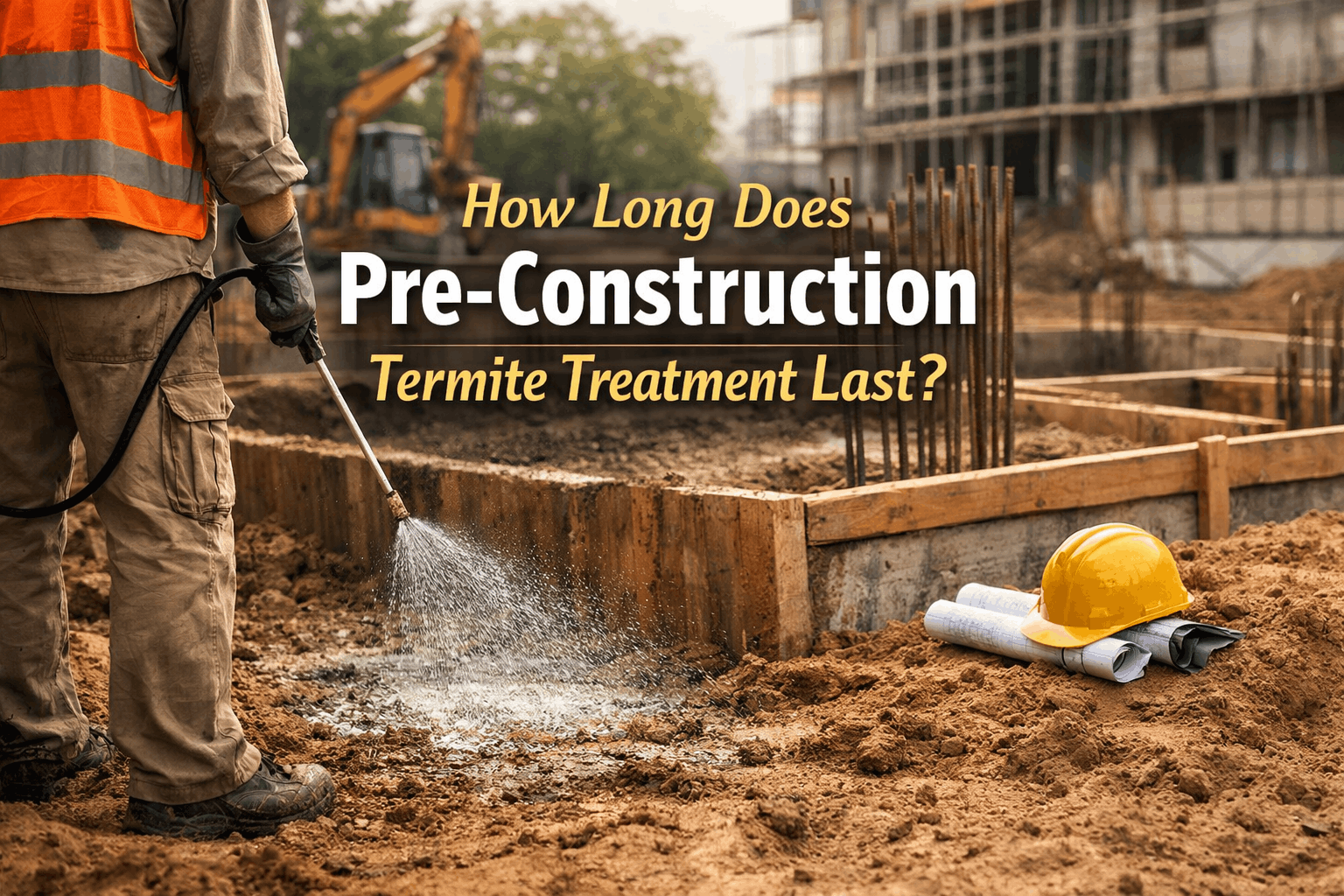
Pre-construction treatment is applied directly to the soil before the concrete slab is poured. The termiticide is placed exactly where termites enter, creating a continuous chemical barrier with no gaps or weak spots. The concrete slab then seals and protects the treated zone from weather, sunlight, and physical disturbance.
Post-construction treatment, on the other hand, requires drilling through existing concrete floors and injecting chemicals through small holes. This method typically lasts only 3 to 5 years because the coverage is less complete and the chemical barrier can have gaps .
Think of it this way. Pre-construction treatment is like installing a security system while your house is being built, with sensors perfectly placed in every possible entry point. Post-construction treatment is like adding locks after someone has already tried to break in, effective but not as seamless.
Scientific Research Behind Treatment Longevity
A peer-reviewed study published in the Journal of Economic Entomology examined how long three common termiticides remain effective in pre-construction applications. The researchers applied bifenthrin, chlorpyrifos, and imidacloprid to soil beneath concrete slabs and tested them over 48 months .
Here is what they discovered:
Bifenthrin (0.067% concentration) showed the best long-term performance. Time to 50% dissipation in the top soil layer was 9 months, but termite mortality remained high throughout the entire 48-month sampling period. This chemical creates a lasting barrier that continues killing termites for years.
Chlorpyrifos (0.75% concentration) had a 6-month half-life but also maintained strong termite mortality at 48 months. Mortality rates in bioassays reached 43%, making it highly effective even after four years.
Imidacloprid (0.05% concentration) degraded the fastest with a 2-month half-life. Termite mortality dropped significantly after the initial sampling period, reaching only 13% at 48 months.
The study also found that the top 2.5 centimeters of soil contained the highest concentration of termiticide at all sampling times. This matters because termites typically travel through the upper soil layers when searching for food.
For homeowners, this research confirms that choosing the right chemical matters. Bifenthrin-based treatments offer the best longevity, while imidacloprid may require earlier reapplication.
Factors That Can Shorten Treatment Lifespan
Even the best pre-construction treatment can fail early if certain conditions exist. Understanding these risk factors helps you protect your investment.
Soil Type and Composition
Soil with high organic matter content can bind to termiticide molecules, reducing their availability to kill termites. Sandy or gravelly soils allow chemicals to leach downward faster than clay soils. According to pest control professionals, very porous soils require higher initial application rates or more frequent monitoring .
Moisture and Drainage Issues
Termites need moisture to survive. If your foundation has poor drainage or chronic moisture problems, termites become more active and the chemical barrier may degrade faster. Water pooling near the foundation can also dilute or wash away termiticides over time.
Soil Movement and Landscaping
Any activity that disturbs the treated soil zone can break the chemical barrier. This includes:
- Landscaping work near the foundation
- Planting trees or shrubs close to the house
- Excavation for utility repairs
- Severe soil settling or erosion
Even adding a new patio, walkway, or flower bed can create gaps in your termite protection if the soil is disturbed below the treated depth.
Construction Quality at the Time of Application
The effectiveness of pre-construction treatment depends heavily on proper application during building. The chemical must be applied at the correct concentration, depth, and coverage area. If the pest control contractor misses spots or uses the wrong dilution, the barrier will have weak points from day one.
HUD guidelines require that all chemical soil treatments be approved by the Environmental Protection Agency and applied in accordance with EPA label instructions . Always hire licensed professionals with experience in new construction treatments.
How to Make Your Treatment Last Longer
You have already made the smart choice by opting for pre-construction treatment. Now here is how you can maximize its lifespan.
Schedule Annual Inspections
Even the best chemical barrier needs regular checkups. Professional termite inspections every year can catch problems early. Many pest control companies offer inspection packages that include re-treatment of disturbed areas at no extra cost.
The National Pest Management Association recommends annual wood-destroying insect inspections for all homes in termite-prone areas. Some states even require specific inspection forms for real estate transactions .
Fix Water Leaks Immediately
Termites are attracted to moisture. A leaking pipe, clogged gutter, or poor drainage creates the perfect environment for termites to thrive. Fixing these issues removes the attraction and helps your chemical barrier work more effectively.
Keep Wood Away from the Foundation
Do not store firewood, lumber, or cardboard boxes against your house. These materials provide food and shelter for termites, allowing them to bypass your soil barrier entirely. Maintain at least a 6-inch gap between soil and any wood siding.
Monitor Landscaping Activities
When you plant trees, install irrigation systems, or add garden beds near your foundation, remind your landscapers about the termite barrier. Ask them to avoid digging deeper than a few inches in the treated zone. If soil disturbance is unavoidable, have your pest control company inspect and spot-treat the area.
Warranties and What They Cover
Most professional pest control companies offer warranties with their pre-construction treatments. Understanding what these warranties actually cover helps you avoid surprises later.
| Warranty Type | Typical Coverage | What is Usually Not Covered |
|---|---|---|
| 1-Year Standard | Re-treatment if termites appear | Structural damage repair |
| 2 to 3-Year Extended | Annual inspections + re-treatment | Damage from untreated wood contact |
| 5 to 10-Year Premium | Full barrier maintenance, damage repair up to limit | Pre-existing conditions, new construction defects |
The HUD guidelines for FHA-insured loans require builders to provide a 1-year guarantee for new construction termite protection. This guarantee must indicate which treatment method was used and that it complies with EPA standards .
For premium warranties lasting 5 years or longer, you typically need to maintain annual inspection contracts and follow specific property maintenance requirements. Read the fine print carefully before signing.
When Should You Retreat?
Even with perfect maintenance, your pre-construction treatment will eventually need renewal. Here are signs that it is time to call a professional:
- You notice mud tubes on foundation walls or floor joists
- Wood sounds hollow when tapped
- You see discarded termite wings near windows or doors
- Your last treatment was 8 or more years ago, especially if imidacloprid was used
- You have done major landscaping or excavation near the foundation
Most experts recommend a professional inspection every 1 to 2 years starting at year 5 after construction. If the inspection reveals chemical levels below effective thresholds or signs of termite activity, spot treatment or full reapplication may be necessary.
For homes in extremely high termite probability zones, some pest control companies offer reticulation systems with recharge ports. These permanent pipe networks allow technicians to add fresh termiticide every 5 to 10 years without drilling or disturbing your landscaping .
Cost vs. Value Analysis
Pre-construction termite treatment typically costs between ₹15,000 to ₹80,000 for a standard Indian home, depending on size and treatment method . In US markets, costs range from $2,000 to $6,500 for new construction .
Compare this to the cost of termite damage repair, which can easily exceed ₹500,000 or $10,000 for moderate structural damage. Termite treatment is one of the few home expenses that offers a truly exceptional return on investment.
Here is a simple way to think about it. Spending ₹30,000 today to protect your home for 10 years costs just ₹3,000 per year. That is less than many people spend on coffee in a month. And it protects an asset worth hundreds of times more.
Frequently Asked Questions
Does pre-construction termite treatment really last 10 years?
Yes, when applied correctly with modern termiticides like bifenthrin, the chemical barrier can remain effective for 10 years or more. Research shows high termite mortality even after 48 months, with gradual degradation expected beyond that timeframe.
Can I treat my existing home to get the same longevity?
Unfortunately, no. Post-construction treatment typically lasts only 3 to 5 years because the chemical cannot be applied as thoroughly under existing concrete slabs.
Do I need annual termite inspections if I have pre-construction treatment?
Yes, annual inspections are strongly recommended starting at year 5. Inspections catch problems early and are often required to maintain warranty coverage.
Which termiticide lasts the longest?
Bifenthrin-based products show the best long-term performance in scientific studies. Ask your pest control provider which chemical they plan to use and request bifenthrin if available.
Will landscaping or gardening damage my termite barrier?
Yes, digging more than a few inches deep near your foundation can break the chemical barrier. Always inform landscapers about the treated zone and have your pest control company inspect after major soil disturbance.
Calculate Your Construction Budget
Now that you understand how long pre-construction termite treatment lasts and why it matters, you might want to see how this cost fits into your overall home-building budget.
Use our Construction Cost Calculator below to estimate your total project expenses, including termite treatment, materials, labor, and other essential items. Simply enter your home size, location, and construction type to get an instant estimate.
🏗️ Estimate Your Construction Budget
Get a research-backed estimate including termite treatment, materials, labor, and optional features. Works for USA, UK & Canada.
📐 Open Construction Cost Calculator →✅ Instant estimate • No sign-up • Free • USA / UK / Canada
Estimate includes foundation, framing, roofing, electrical, plumbing, finishing, and termite protection
Final Takeaway
Pre-construction termite treatment is one of the smartest investments you can make when building a new home. It lasts 5 to 10 years, costs a fraction of potential damage repairs, and gives you peace of mind knowing your home is protected from the ground up.
The key to maximizing this investment is simple. Choose a licensed professional, request a bifenthrin-based treatment, fix moisture issues promptly, and schedule annual inspections starting at year five. Do these things, and your termite barrier will likely last a decade or more.
Your home is probably the largest purchase you will ever make. Protecting it from termites is not an expense. It is an essential part of responsible homeownership.